Skip to content

Five percent of the forest remains.
We’re restoring the rest.

Ten thousand hectares of fallow Jhum land in Nagaland, restored by Naga communities inside the Indo-Burma Biodiversity Hotspot. Land held under Article 371A. A 40-year crediting period inside a century of stewardship.

  • 10,000ha

    Fallow Jhum land restored across Tseminyu and Longleng

  • 3.86Mt CO₂e

    Net issuable carbon credits over forty years

  • 200K–250K

    people in cohort villages, across eight districts

  • 16species

    Native species across four canopy layers, chosen village by village

The land

Two homelands, two restoration models, one framework chosen village by village.

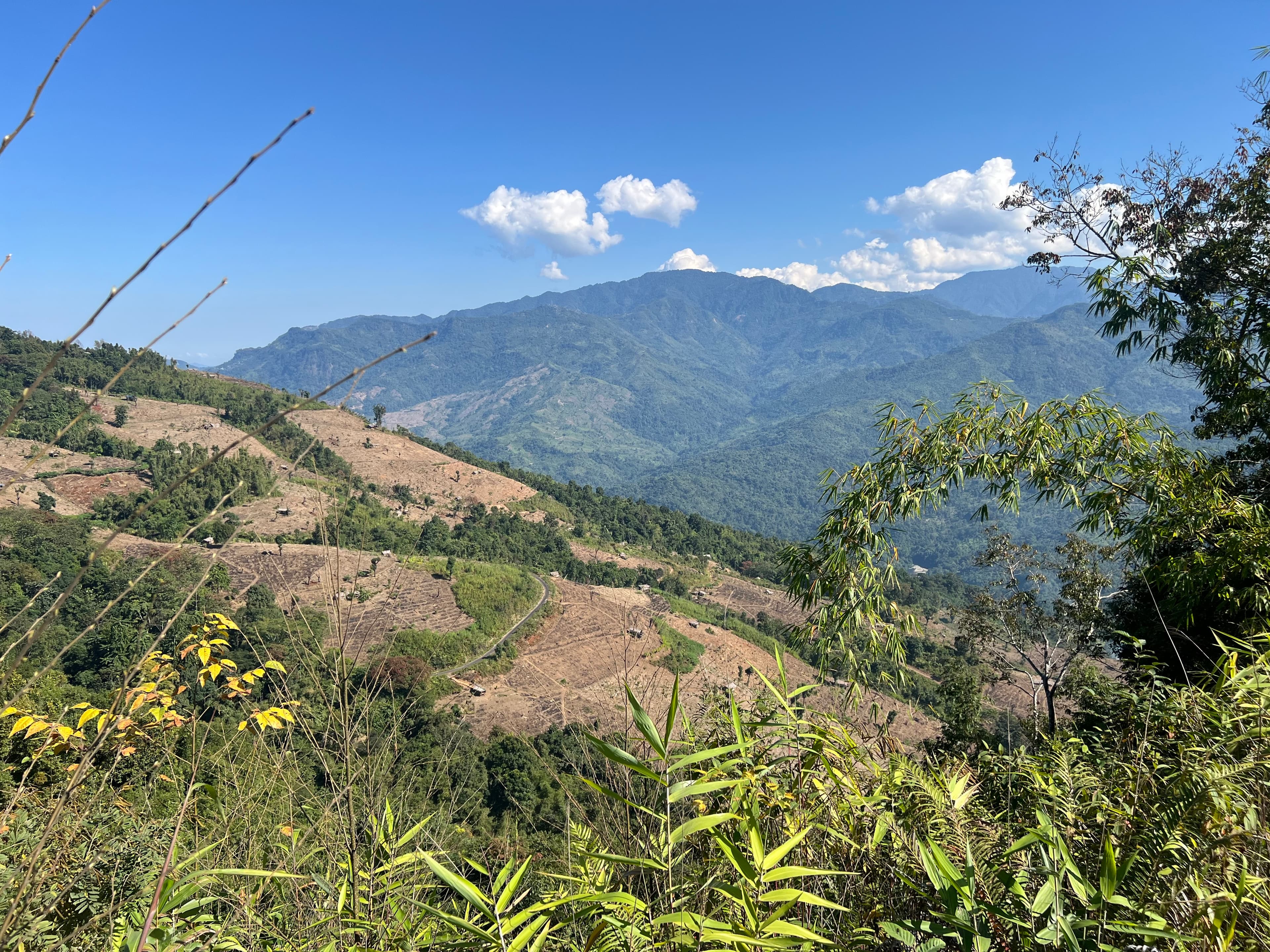
Tseminyu and Longleng — two districts of Nagaland, held by clan, village, and household under customary law. Two restoration models run in parallel, 5,000 hectares each, alongside livelihood pilots. Carbon credits fund the patience the work requires; the stewardship outlasts them.

Indo-Burma Biodiversity HotspotArticle 371A · community land40-year crediting · century-scalePilot · June–September 2026
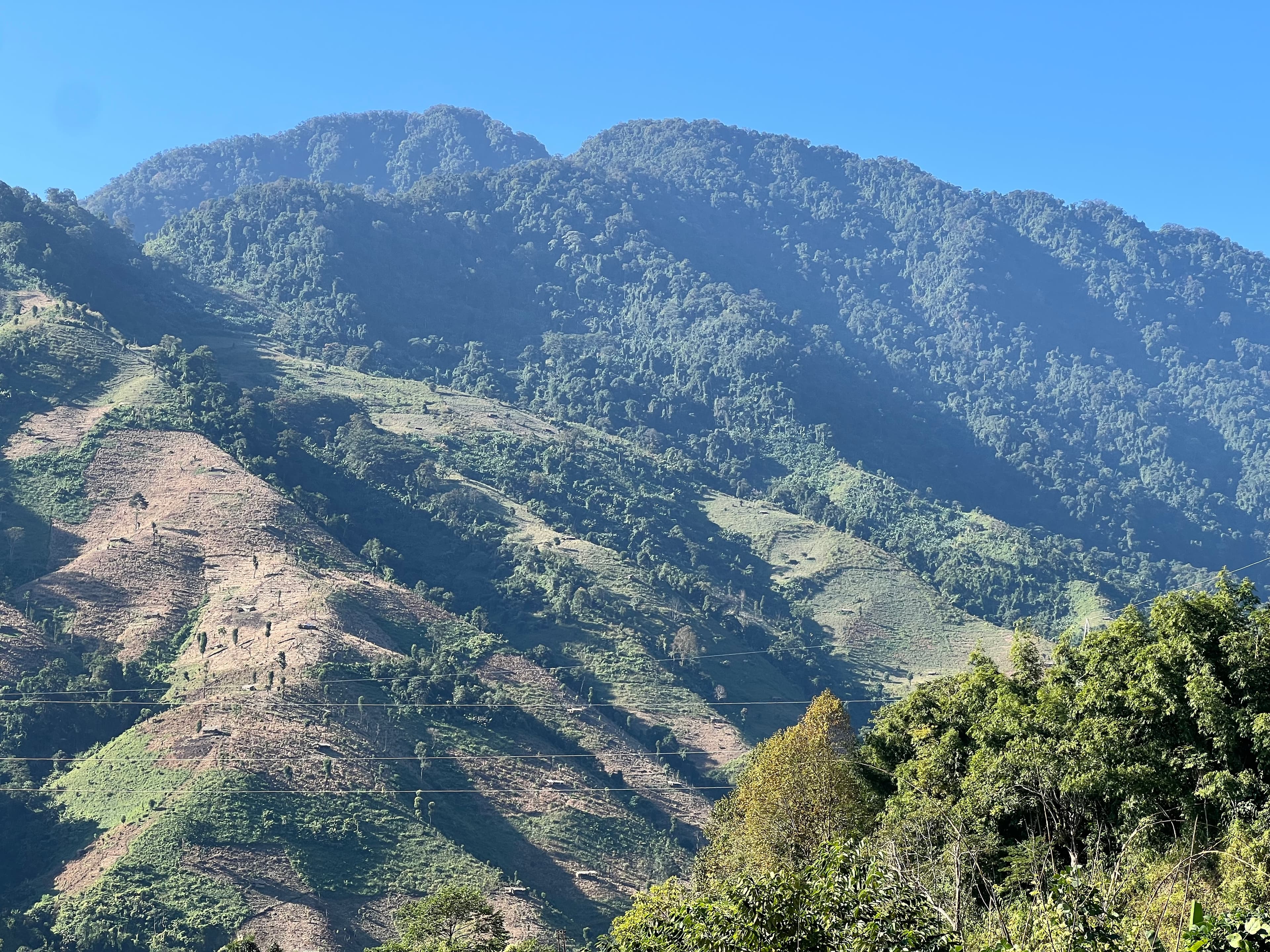
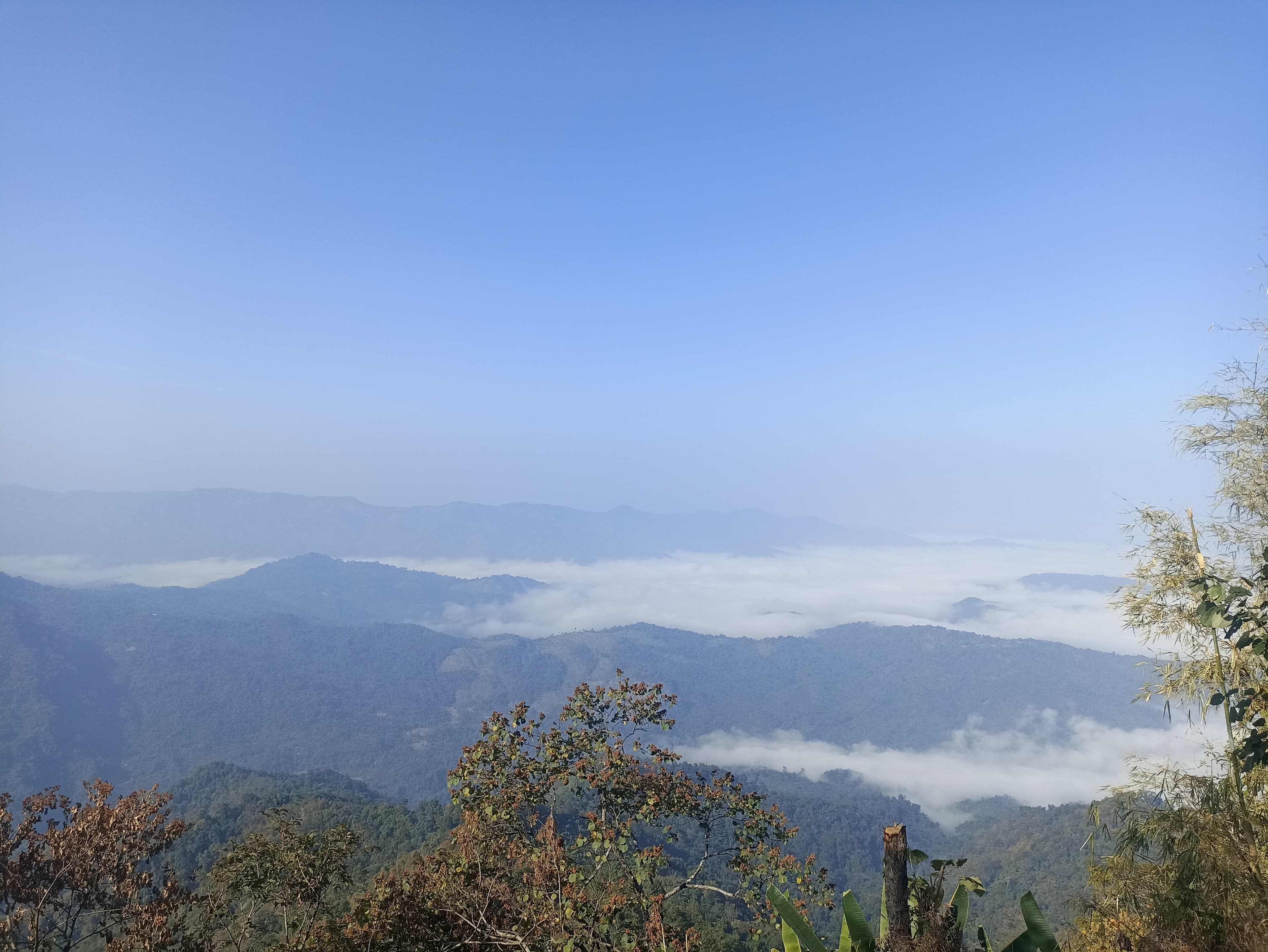
Rolling hills of Nagaland — the Patkai range at dawn.
25°52′N 94°33′E · Tseminyu + Longleng, Nagaland

Patkai range · 800–2,000 m · the warm corner of Nagaland

Tseminyu · Agroforestry

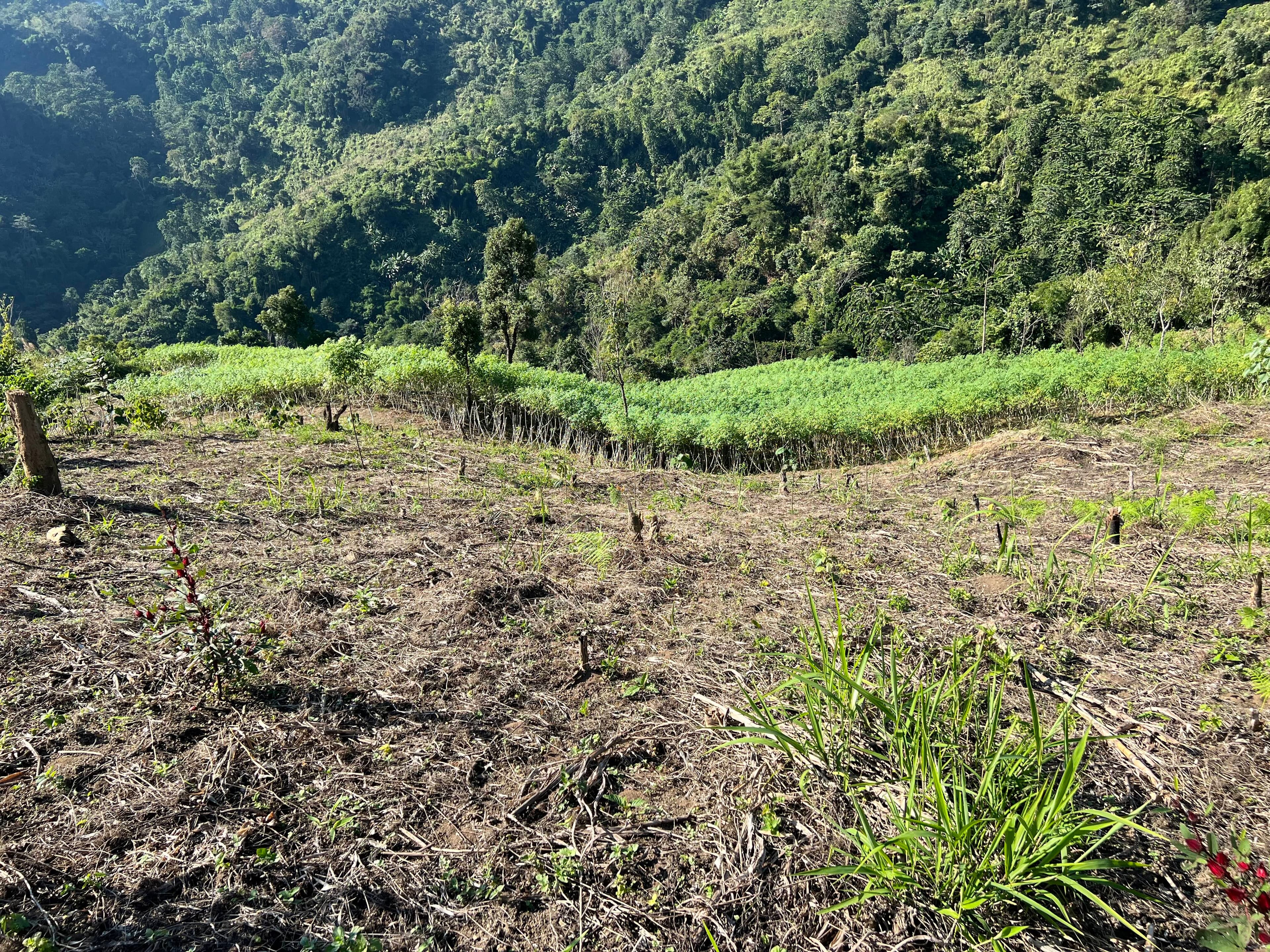
600–700 trees per hectare, with crops between rows.

Short-rotation income continues from year one; perennial understory crops — coffee especially — begin producing by year five. Livelihood pilots (poultry, piggery, terrace cultivation, fishery) woven in alongside.


Longleng · Full-scale restoration

1,000–1,200 trees per hectare, native canopy re-established.

Degraded slopes stabilised, intact-forest corridors reconnected. Livelihood pilots — coffee nurseries, livestock, terrace cultivation, fishery — structured around restoration, not displaced by it.

Methodology

Verra VCSVM0047v1.1

Co-benefits

CCB Standardsv3.1

Developers

MicroEnergy CreditsCarbonMarketsHQ
Where we are now

May 2026. Partners in place. Pilot planting begins in weeks.

A 40-year crediting period on a six-year planting ramp. The stewardship continues well past it.

  1. Pilot

    30 ha · 15 ha agroforestry in Tseminyu, 15 ha restoration in Longleng · June–September

  2. First cohort

    1,500 ha planted · livelihood pilots underway

  3. First issuance

    Credits begin issuing from the pilot cohort

  4. Full scale

    10,000 ha under community management across both districts

  5. Peak yield

    117,248 tCO₂e annual issuance · 11.72 tCO₂e/ha/yr

  6. Crediting closes

    40-year period ends · the forest stands · stewardship continues

The arc

Land. Rhythm. Pact.

A pilot of thirty hectares begins this June. By 2031, the model carries ten thousand. The story sits in three beats — read each, then read the whole.

What we hold ourselves to

Seven Sustainable Development Goals.

The project's outcomes map to seven of the United Nations' SDGs — climate, biodiversity, livelihoods, equity, and the partnerships that hold the work together.

SDG 1 · No Poverty

01 · No Poverty

SDG 2 · Zero Hunger

02 · Zero Hunger

SDG 5 · Gender Equality

05 · Gender Equality

SDG 8 · Decent Work

08 · Decent Work

SDG 13 · Climate Action

13 · Climate Action

SDG 15 · Life on Land

15 · Life on Land

SDG 17 · Partnerships

17 · Partnerships

How it works

VM0047 Appendix 1, with a dynamic baseline drawn from this land.

Baselines are derived from matched Jhum control plots, not an assumed business-as-usual. Sentinel-2 canopy cover with NDFI supports a ground-plot network that calibrates against AGB in this biome. The methodology, the carbon pools, and the governance approach all sit in one place.

VM0047 Appendix 1Sentinel-2 + ground plots★ CCB Gold target
The pact, in plain words
In 1963, the Constitution recognised that the forests of Nagaland were never the state's to lease away. Sixty-three years later, the same protection is what allows a village in Longleng to issue a carbon credit. The land has not changed hands. It will not change hands. That is the project.
Article 371A · framing for the Local Community Structure meetings
Who's building it

Four organisations. One responsibility.

Two project proponents and two local-led implementation partners — one per district — operate under a single carbon framework and a single benefit-sharing approach.

01

MicroEnergy Credits

Project proponent

Carbon-market infrastructure, registry interface, credit origination, buyer relationships, and the financial backbone that absorbs establishment cost.

02

CarbonMarketsHQ

Co-project proponent

Project design, dMRV architecture, methodology engineering, investor relations, and the knowledge system that holds the project together.

03

Tseminyu partner

Local-led · grassroots

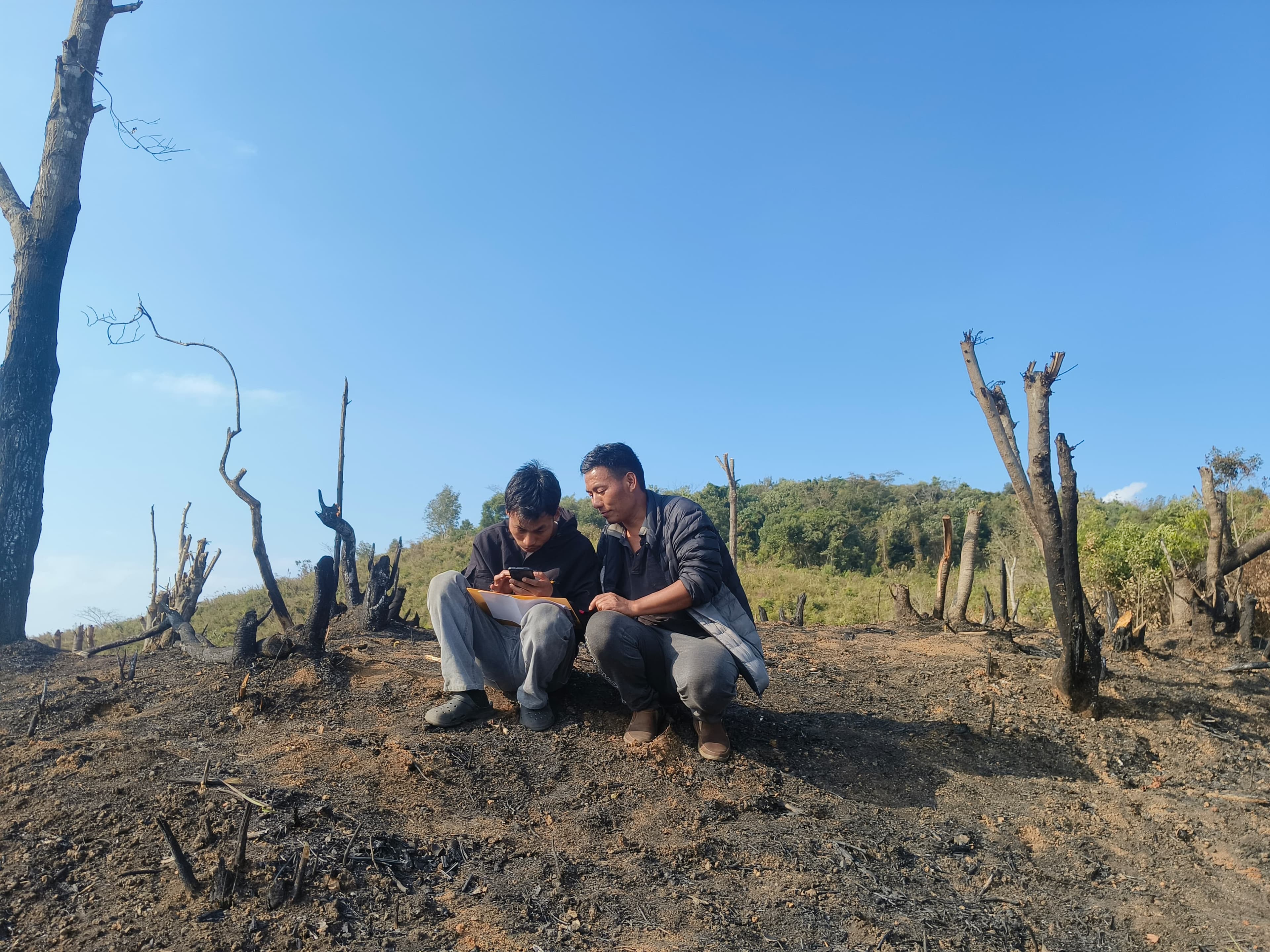
An award-winning community steward of the Tseminyu landscape. Leads agroforestry at 600–700 trees per hectare with coffee, cardamom, pepper, and annual crops between rows. Holds the line on FPIC and Gram Sabha governance.

04

Longleng partner

Local-led · grassroots

An award-winning community steward of the Longleng landscape. Leads full-scale restoration at 1,000–1,200 trees per hectare across degraded slopes, with alternative livelihoods woven in from year one.