Skip to content
The Story

The land, the people, and the work that joins them.

Eight chapters, about fifteen minutes end to end. Read them in order for the arc, or jump to the chapter that fits your question.

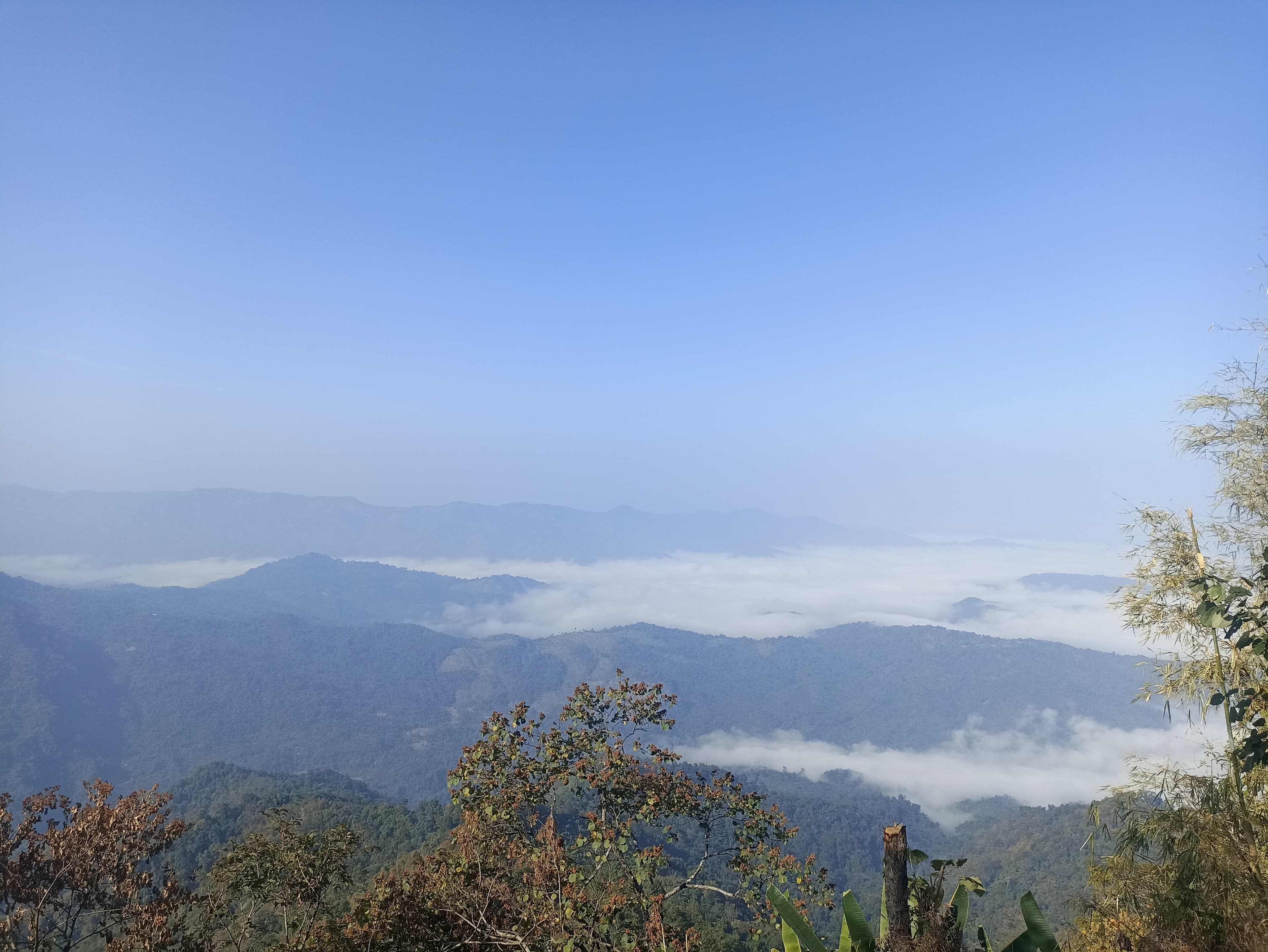
Layered ridges of Nagaland's Patkai range under morning mist.

Layered ridges of Nagaland's Patkai range under morning mist.

Ch. 01The land

Where the hills hold the year.

Two homelands of Nagaland, inside one of the most threatened forests on earth.

The project sits across the Tseminyu and Longleng districts of Nagaland, India — the western and eastern flanks, respectively, of the Patkai range. Tseminyu became Nagaland's twelfth district in December 2021; Longleng was carved out of Tuensang in 2004. Both are mid-elevation hills, between roughly eight hundred and two thousand metres, in what Nagas call the warm corner of the state.

These hills lie inside the Indo-Burma Biodiversity Hotspot — among the most biologically rich and most endangered hotspots on earth, with only about five percent of original vegetation remaining across the wider region. Nagaland itself, per the Forest Survey of India's ISFR 2023, retains roughly fifty-two percent forest cover, but is losing it faster than any other Indian state. The forests are not the state's, in any administrative sense — almost ninety percent are held by clan, village, and household. The land decisions are the village's.
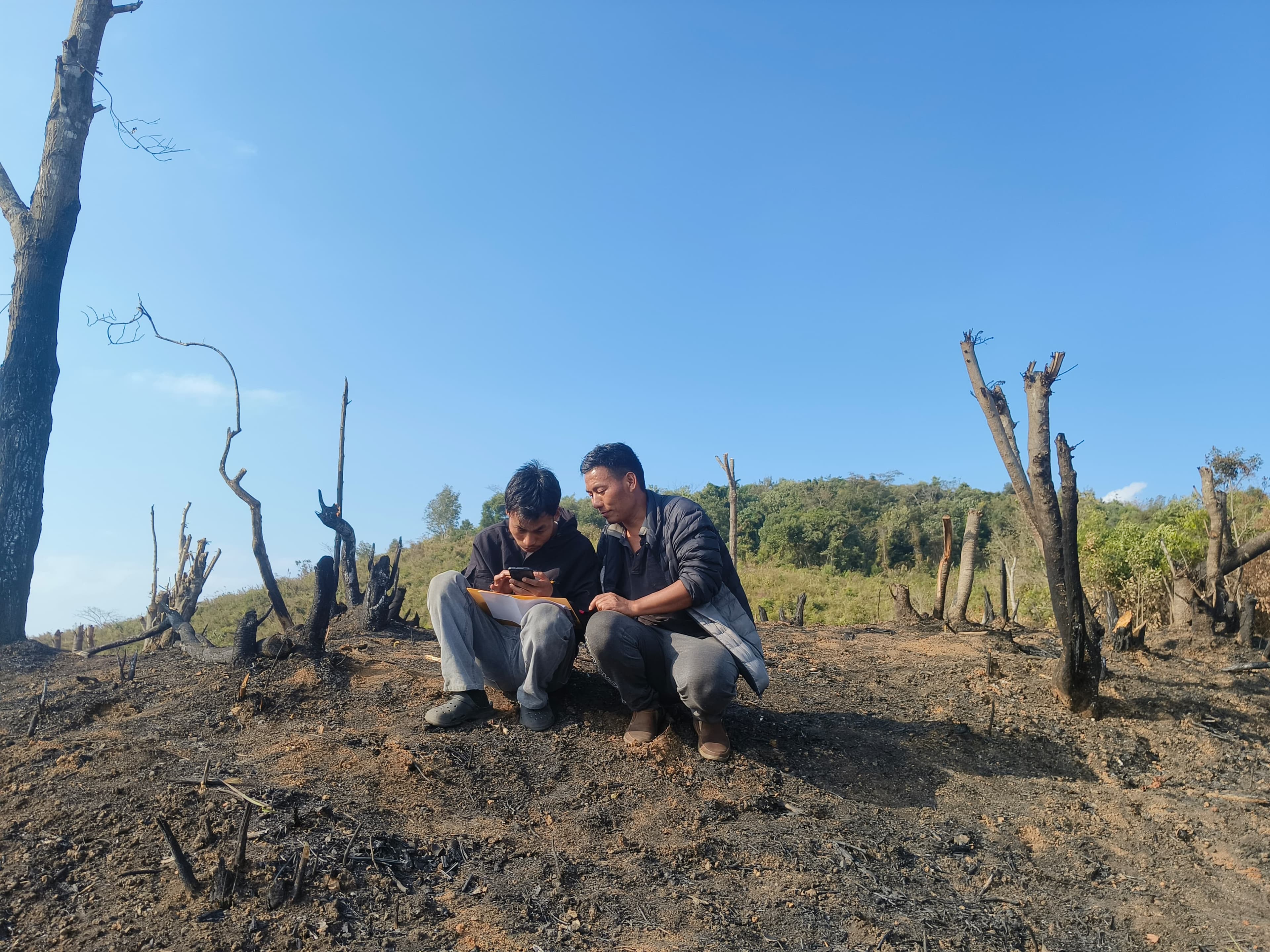
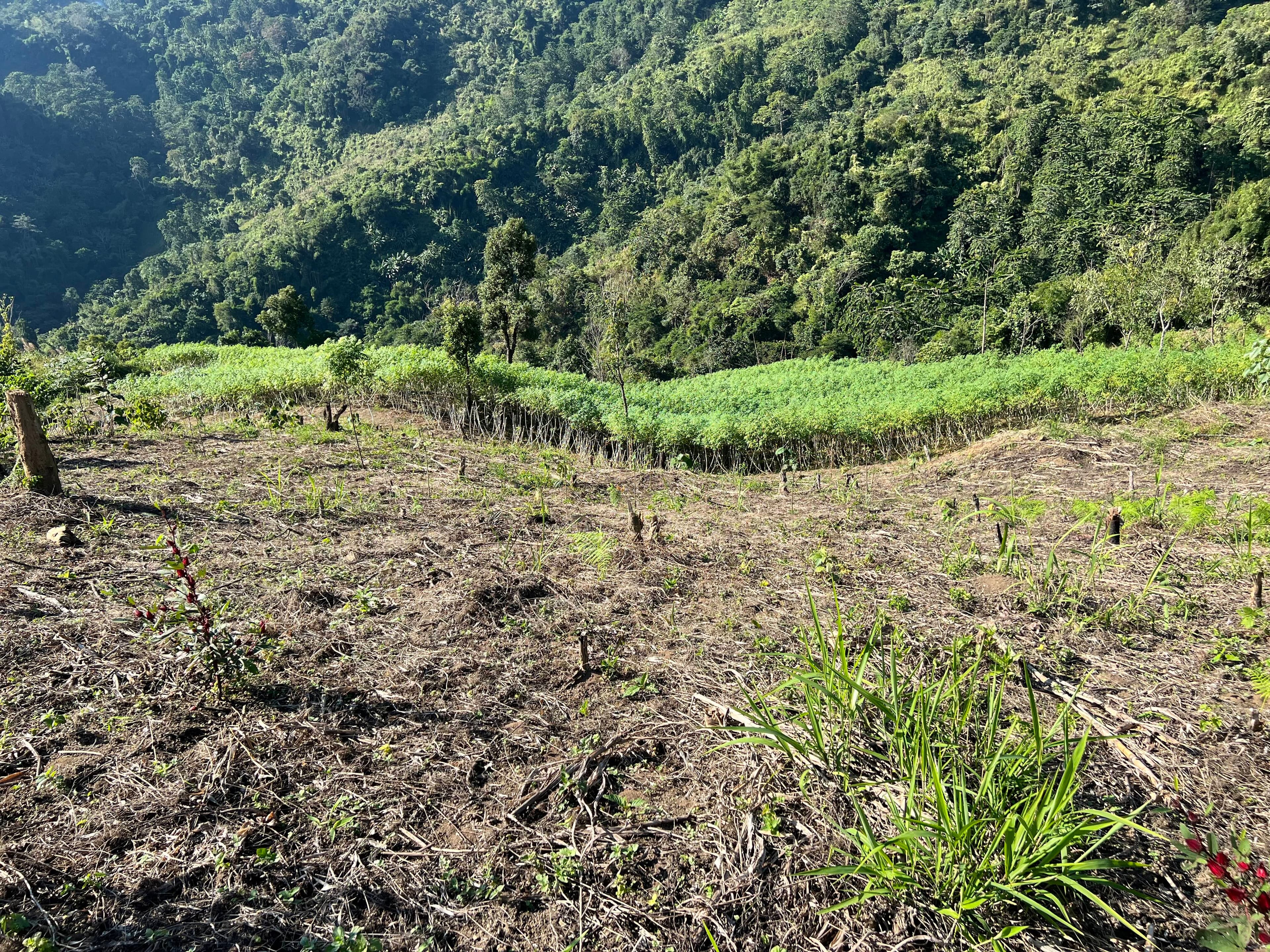
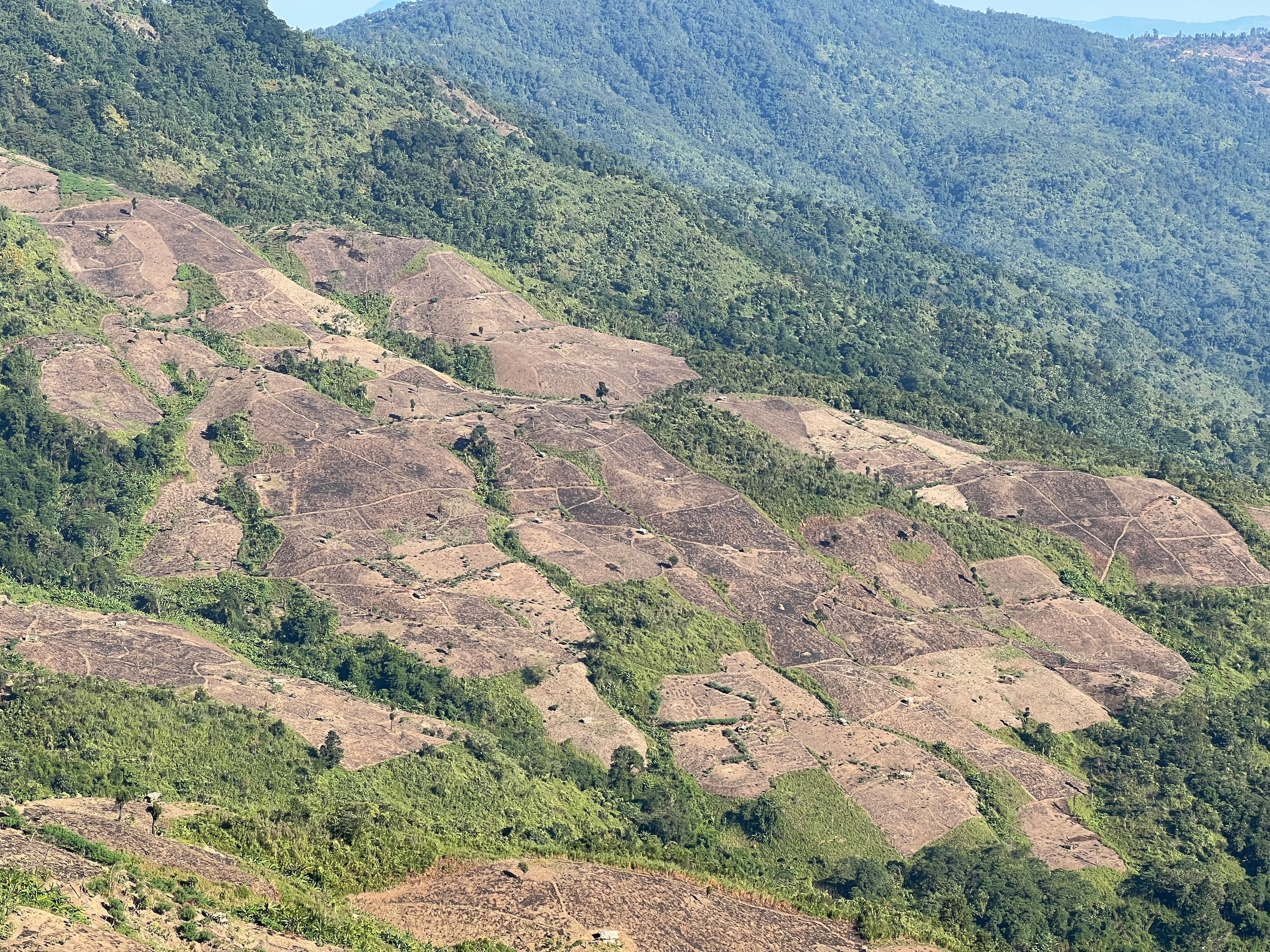
A Jhum cultivation plot with a recent burn and a polyculture planting beginning to emerge.

A Jhum cultivation plot with a recent burn and a polyculture planting beginning to emerge.

Ch. 02The rhythm

What Jhum is, before it is a problem.

Shifting cultivation, before it became an ecological worry, was a knowledge system.

A family clears a patch of secondary forest. The trees dry through the winter. In late February or early March, the plot is burned. With the first rains in April, the seed goes in — not one crop but forty: upland rice, millets, maize, taro and yam, cucurbits, beans, perilla, ginger, the famed Naga king chilli, and the orchard layer of banana and papaya. The plot is harvested between September and November and left fallow.

Naga elders distinguish in their own terms between the short fallow and the long fallow. A short fallow of three to five years gives a young, brushy regrowth; a long fallow of ten to twenty years lets true secondary forest return — the canopy closes, leaf litter rebuilds humus, the seed bank refills. Elders call them, roughly translated, thin soil and fat soil. The crisis of the last fifty years is that population pressure has shortened almost every fallow into the thin-soil cycle. Restoration, in indigenous terms, is putting the fat soil back.

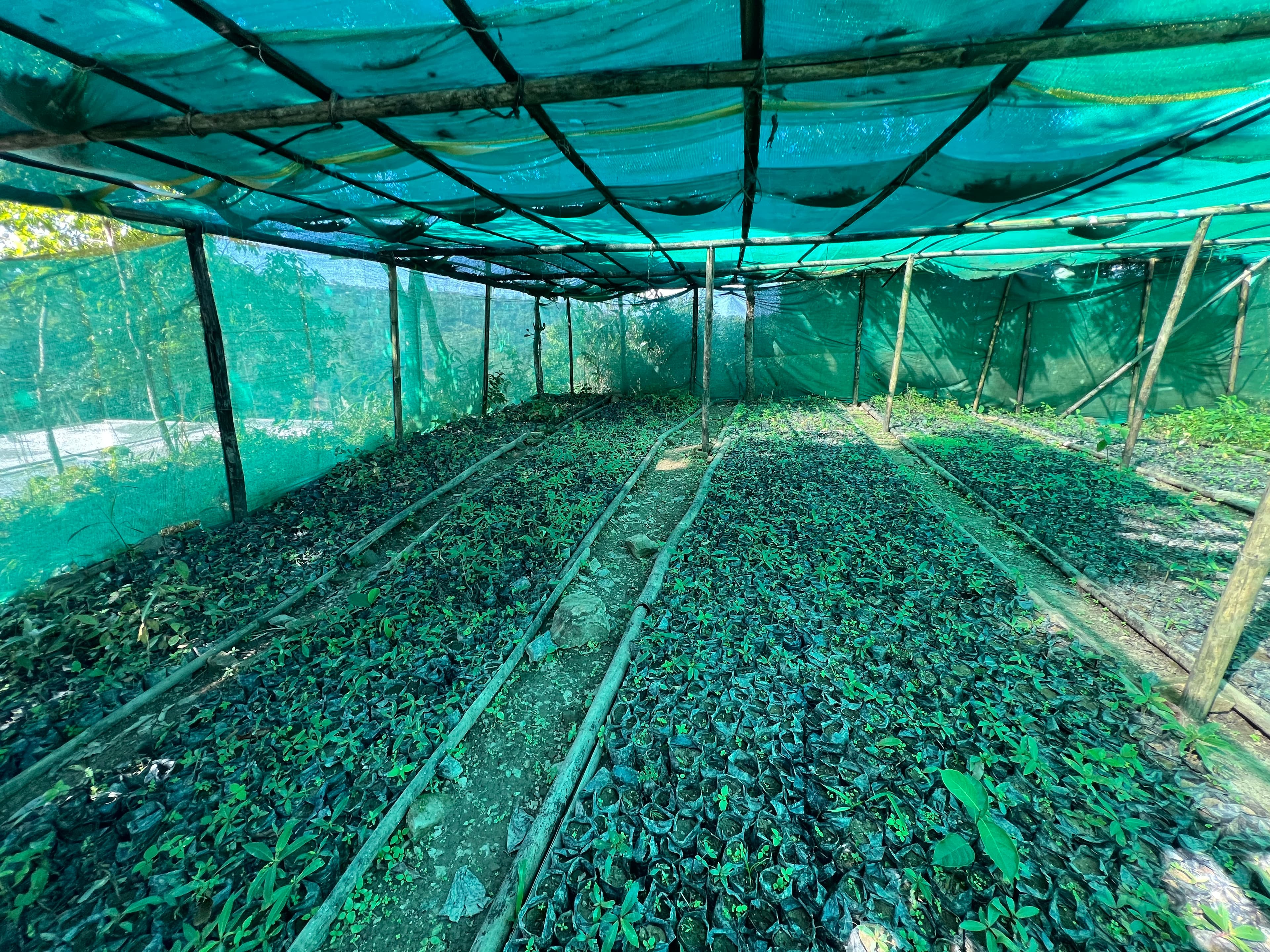
Native tree saplings in a village-run nursery.

Native tree saplings in a village-run nursery.

Ch. 03The institution

Before the carbon project, there was a school.

Every Naga village had its great institution for ecological knowledge. They are part of what this project is rebuilding.

At the centre of a Naga village stood the Morung — a long, high-roofed timber-and-bamboo dormitory, the largest building in the village. Until the mid-twentieth century, every adolescent spent years there learning weaving and weapon-craft, song and oral history, intertribal diplomacy — and, crucially, ecological knowledge. Which trees to fell and which to leave standing. When the forest opens and when it closes. Which songs to sing as a tree comes down. The Morung was, simultaneously, the village’s school, its parliament-in-training, and its ecological library.

Most Morungs have not been used in a generation. The state’s Heritage Centre and several tribal councils have been quietly rebuilding a few since the early 2000s. Outside the village, every healthy Naga landscape historically had a community-protected forest — felling forbidden, only certain ritual gathering allowed. A homestead and gardens at the centre, rotating Jhum blocks beyond, and the protected forest at the edge — three concentric rings. What has frayed is the third ring. Forest Futures, in the most honest framing we can offer, is a project to plant the third ring back.

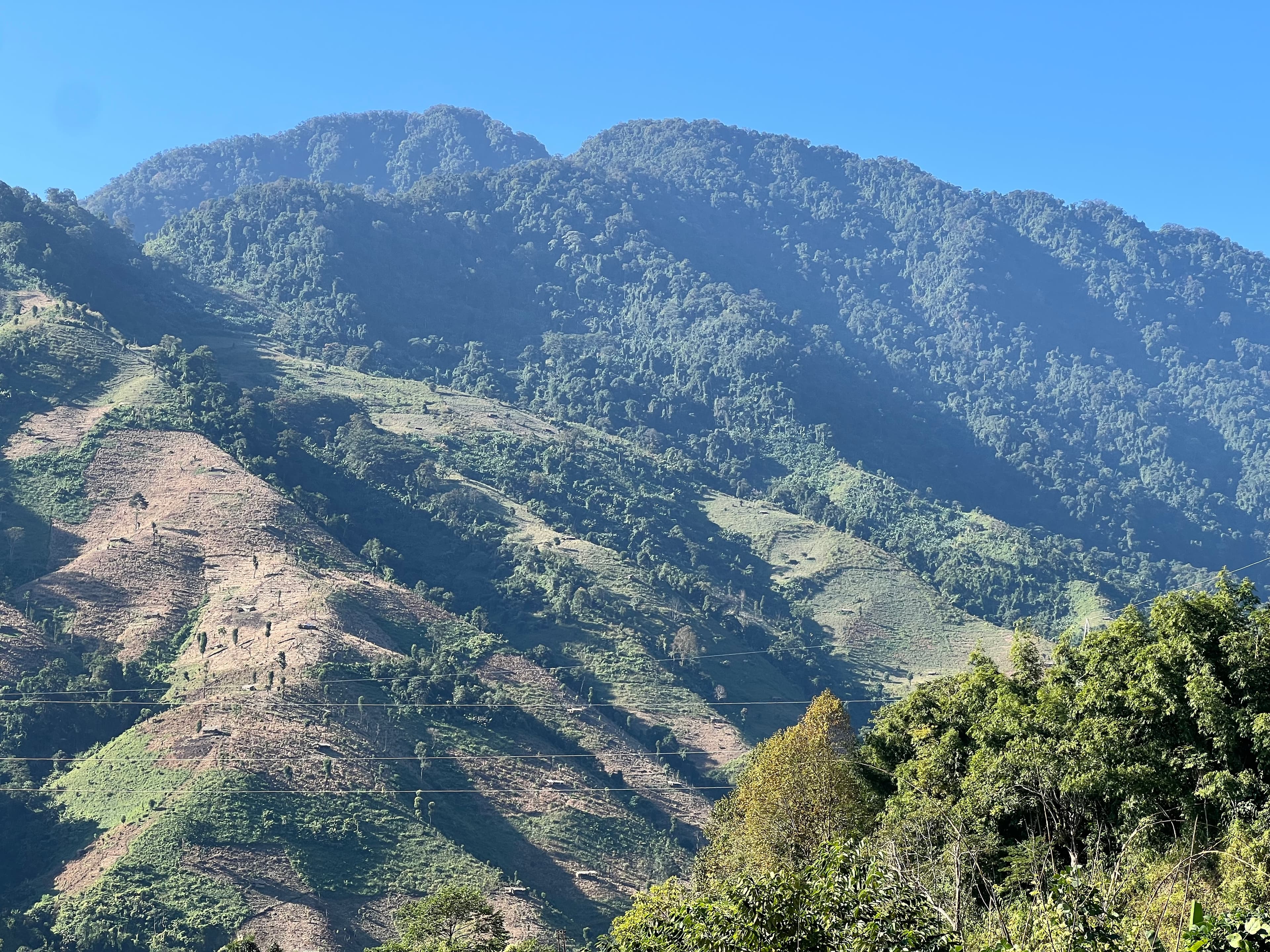
Hills of Nagaland — community-held land under Article 371A.

Hills of Nagaland — community-held land under Article 371A.

Ch. 04The constitution

The land was never the state's to lease.

Tribal land in Nagaland is held under a constitutional protection older than most carbon standards.

On 1 December 1963, Nagaland became a state of the Indian Union, and Article 371A — a single Article, four short clauses — was the constitutional spine of that statehood. It says that no Act of Parliament shall apply to Nagaland in respect of religious or social practices, customary law, the administration of justice under customary law, or — the operative clause for any land project — the ownership and transfer of land and its resources, unless the Legislative Assembly of Nagaland by resolution decides.

What this means in practice is that almost all the land in Nagaland is not government land. It is held by clan, by village, and by household, with the village council as the ultimate authority. The forest department exercises management authority over a small reserved share; the rest is the village’s. The mechanism by which this project can plant on ten thousand hectares without state alienation is exactly Article 371A: the community already owns the land and the trees. By the same logic — and this is the line the project rests on — the community owns the carbon.

A two-year-old plantation showing the transition between bare ground and closing canopy.

A two-year-old plantation showing the transition between bare ground and closing canopy.

Ch. 05The carbon

A bridge, not a replacement.

Carbon is one outcome among several. The story is the forest, the village, and the families that planted them.

The project is registered under Verra’s VCS using VM0047, the standard for area-based reforestation. We use the performance method — Appendix 1 — because it builds the baseline from matched Jhum control plots stratified by fallow age, rather than from an assumed counterfactual. Monitoring runs on Sentinel-2 canopy cover, with NDFI as a supporting signal, calibrated against a network of permanent ground plots. The pre-validation projection is a net issuance of 3.86 million credits over the forty-year crediting period, peaking in 2052.

All of that is published, but it is not the story. The story is that none of the credits are revenue the community waits on for food. Agricultural income from agroforestry continues from year one. Coffee and other perennial understory crops begin producing by year five. Carbon revenue funds a community fund and a set of livelihood pilots; it is the bridge between the short-fallow present and a longer-income system that the village governs. Carbon is one outcome among several — biodiversity, livelihoods, governance, and the forest itself are the others.

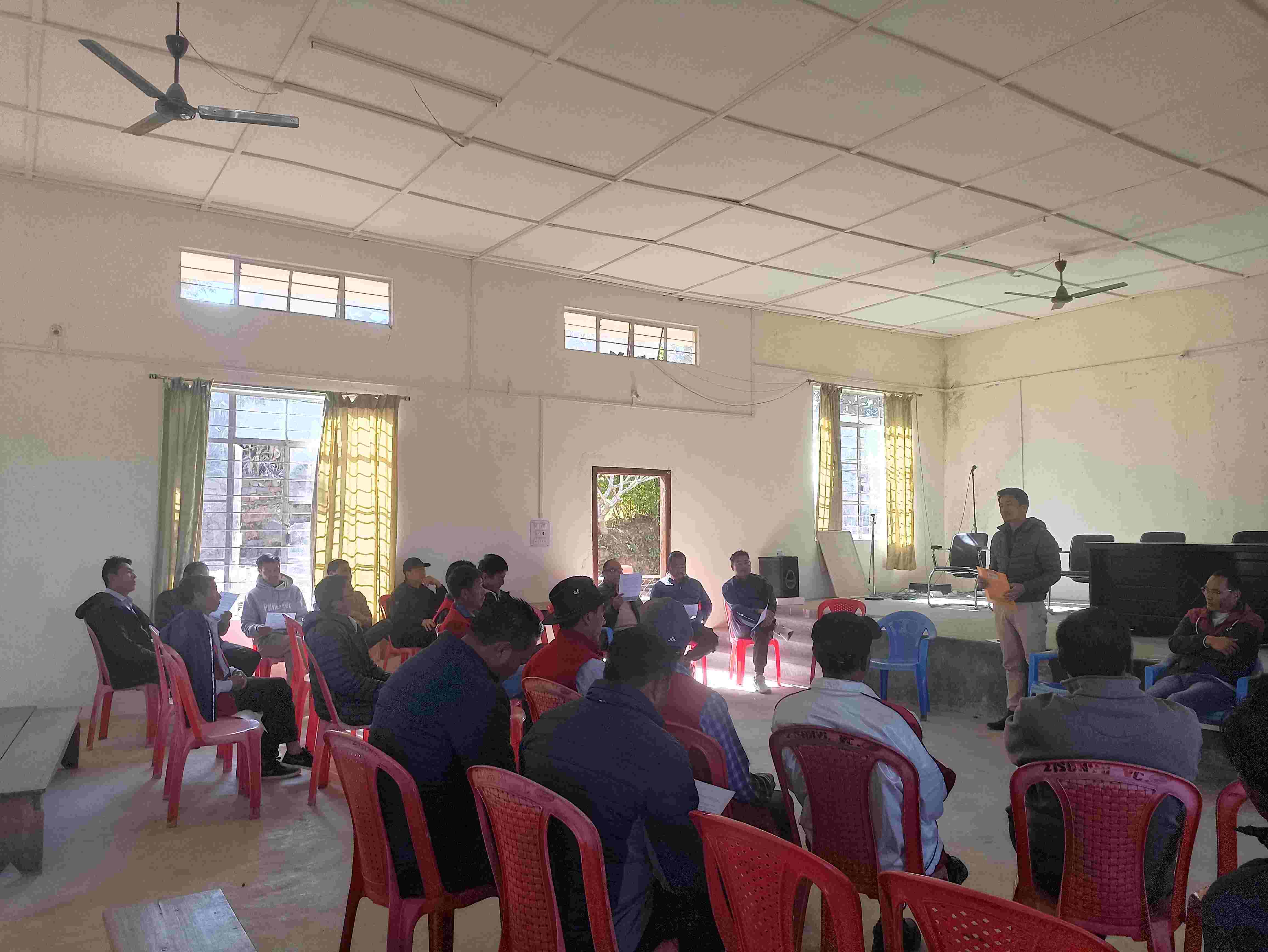
A Local Community Structure meeting in a village hall.

A Local Community Structure meeting in a village hall.

Ch. 06The pact

Community-owned means the community owns.

The benefit-sharing approach, in plain words.

The community share of net cash flow grows in phases as the project matures. In the pre-revenue years, the proponent absorbs establishment cost while community wages flow from year one as a project expense. Once carbon revenue activates, the community share opens, then grows toward its long-term level over the life of the project. Across the four phases, at least half of net cash flow flows to the community fund. The structure is reviewed at every verification, with independent facilitation and Gram Sabha ratification.

The community fund itself is administered by a Village Protection & Management Committee — the VPMC — answering to the Gram Sabha. Decisions on its use are made in assembly, in language, in person. The implementation partner sits on the VPMC as an ex-officio non-voting member, which protects the project from liability and the community from capture. Two audits run alongside: a community social audit annually and an independent financial audit every two to three years. Wages paid to community labour are project costs flowing to the community — they are never added to the headline community share.

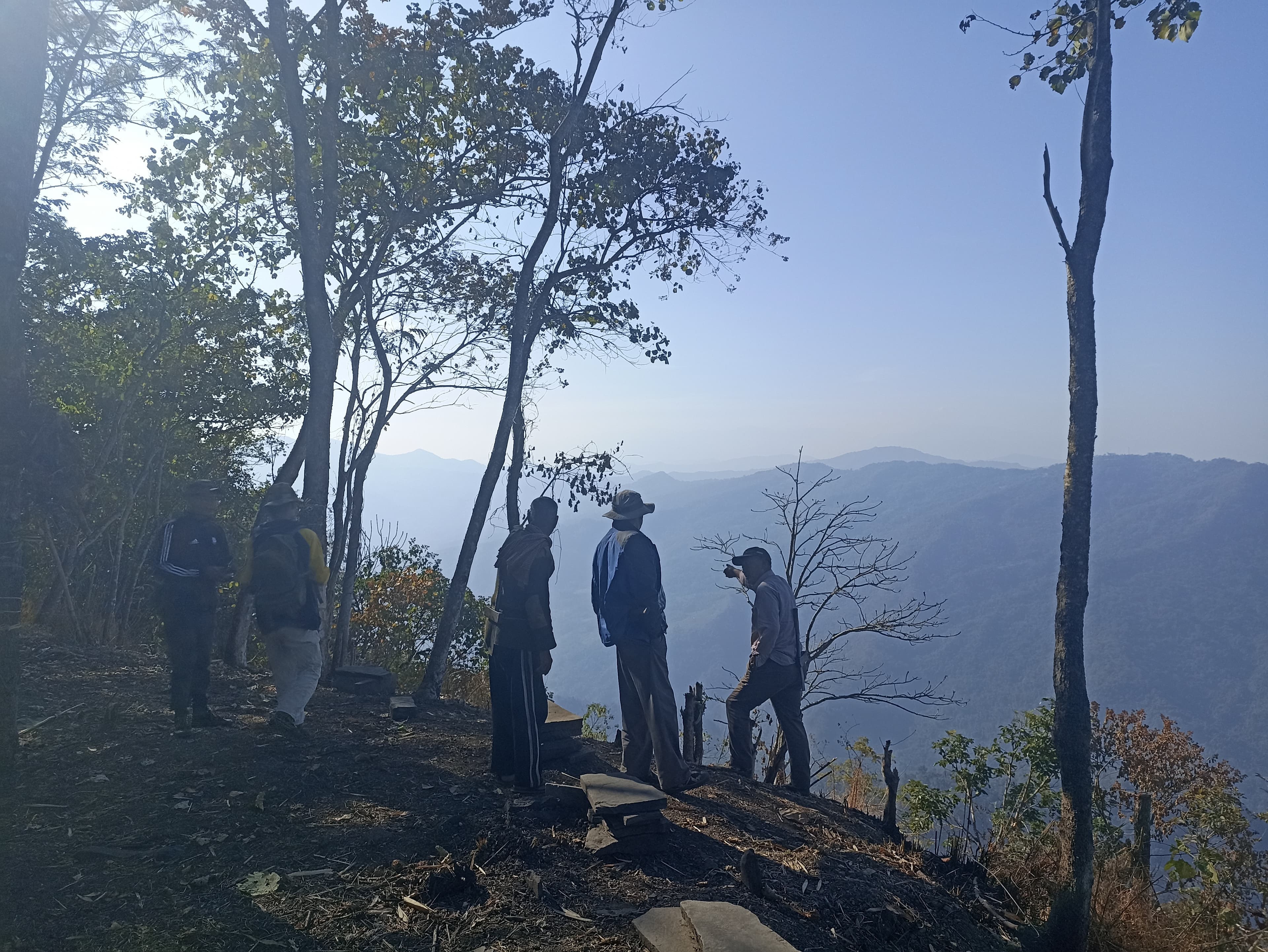
A wide view of the Nagaland landscape at dawn.

A wide view of the Nagaland landscape at dawn.

Ch. 07The pilot

Thirty hectares this June.

A pilot in June 2026. A cohort each year. Ten thousand hectares by 2031.

The thirty-hectare pilot begins this June, split across both districts. Fifteen hectares of agroforestry in Tseminyu, at six hundred to seven hundred trees per hectare, with coffee, cardamom, pepper, and annual crops between rows. Fifteen hectares of full-scale restoration in Longleng, at a thousand to twelve hundred trees per hectare, on degraded slopes where intact-forest corridors are reconnecting. Both pilots learn. Both teach. By 2027, fifteen hundred hectares join the first cohort. Each subsequent year adds a cohort of about two and a half thousand. By 2031, the full ten thousand are under community management.

The choice of model — agroforestry or full-scale restoration — is the village’s. So is the species mix within the thirteen-species native palette. So are the livelihood pilots that run alongside. Across the project, beneficiary outreach estimates point to two hundred to two hundred and fifty villages, eleven thousand to fifteen thousand directly participating households, and two hundred to two hundred and fifty thousand people in cohort villages across eight districts. The pilot is the smallest scale at which we will learn the things we cannot learn from a model.

Wide Nagaland landscape under broken cloud — the long horizon.

Wide Nagaland landscape under broken cloud — the long horizon.

Ch. 08The horizon

A century of stewardship.

The credit period closes in 2066. The forest and the governance continue.

Peak issuance in 2052 is projected at 117,248 tonnes of CO₂-equivalent — about 11.72 tonnes per hectare per year. The curve is a bell: early growth, peak in the mid-2050s, gentle taper to the 2066 close of the crediting period. By that close, the children who watched the pilot go in this June will be in their forties. The village councils will have reviewed the agreement more than a dozen times. Several Morungs will have been rebuilt. A long-fallow cycle, lost in many villages, will have been re-established in the project plots.

What the crediting period closes is a document. The forest stands. The bet is not that forty years of carbon work — it is that the century of stewardship that follows does. The Constitution, in 1963, recognised that the forests of Nagaland were never the state’s to lease away. By 2066, the same protection will have outlasted six prime ministers and several iterations of the carbon market. The land will not have changed hands. It will not change hands. That, finally, is the project.

The forest is not something we own. It is something we belong to.
Elder · Local Community Structure meeting · Tseminyu, January 2025